
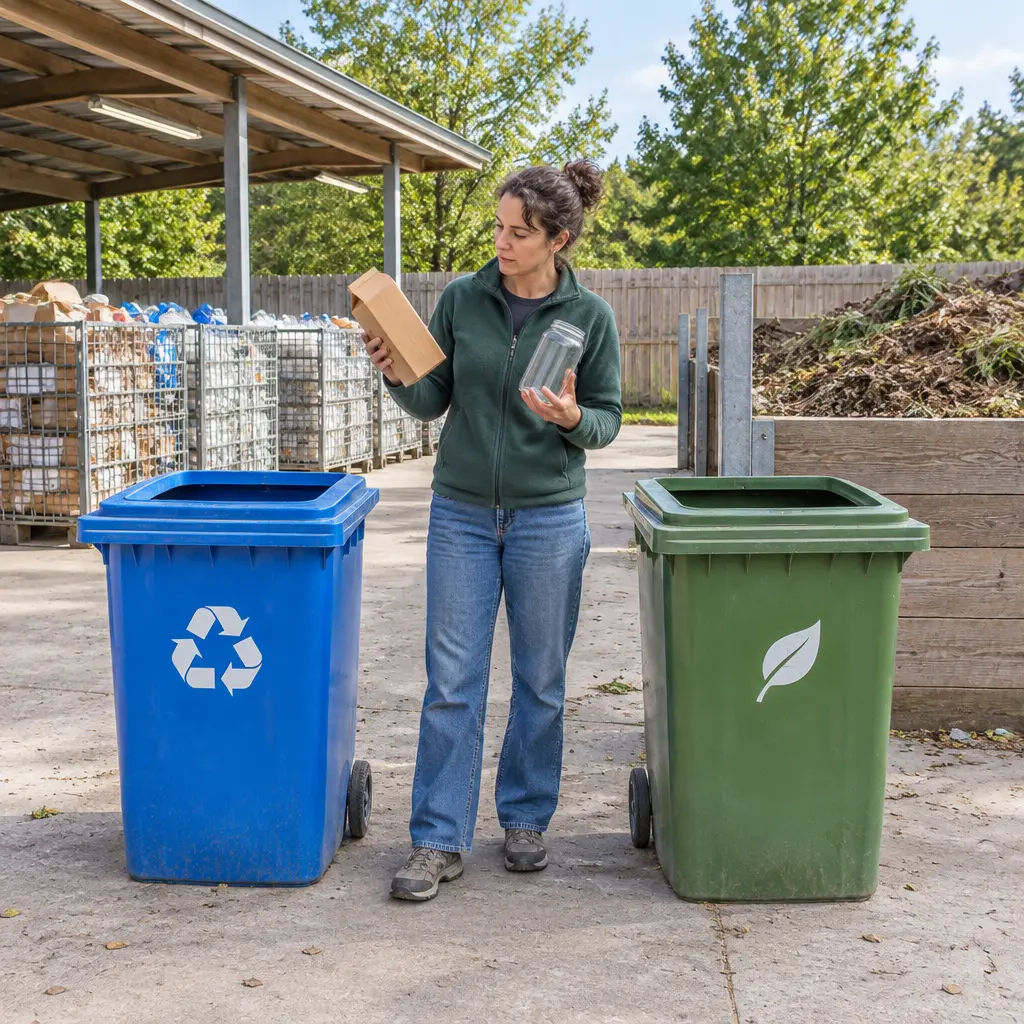
Sustainable packaging materials are materials intended to reduce packaging’s environmental impacts across production, use, and disposal. Their sustainability depends not on labels such as “compostable” or “recyclable” alone, but on whether local collection and processing systems can actually handle them and whether they reduce impacts compared with a realistic alternative. The United Nations Environment Programme (UNEP) reported that global plastic production reached about 400 million tonnes annually, while plastic waste generation was estimated at 353 million tonnes in 2019; only 9% of that waste was ultimately recycled. These figures show why end-of-life performance—alongside material sourcing, product protection, and reuse—must guide packaging choices.
End-of-life performance defines sustainable packaging materials
End-of-life performance is the outcome a package achieves after use: it may be reused, recycled into a new product, composted under specified conditions, incinerated, landfilled, or escape into the environment. The U.S. Environmental Protection Agency (EPA) describes sustainable materials management as an approach that considers the entire life cycle of materials, rather than focusing only on disposal. Applied to packaging, that means assessing the package’s composition and design together with the collection, sorting, and processing infrastructure available where it is sold.
The main end-of-life pathways—reuse, recycling, composting, and residual disposal—are not interchangeable. A package may be technically recyclable but not accepted by local programs; compostable packaging may require an industrial facility that is not accessible to consumers; and a lightweight material may lower transport emissions while creating contamination in a recycling stream. The U.S. Federal Trade Commission’s Green Guides caution that unqualified claims such as “recyclable” can mislead when appropriate facilities are not available to a substantial majority of consumers or communities.
Recyclability depends on systems, not symbols
Recyclability is the practical ability of a package to be collected, sorted, and processed into a usable material at scale. It depends on design features such as material type, color, labels, adhesives, closures, and the presence of multiple bonded layers, as well as on local facility capabilities. UNEP’s 2019 estimate that just 9% of plastic waste was recycled illustrates the gap between a material’s theoretical recyclability and recycling achieved in practice.
For example, a widely accepted, clearly labeled paperboard carton may fit established fiber-recycling systems, whereas a flexible pouch made of several fused plastic layers can be difficult for conventional sorting and reprocessing equipment. Even a package made from a commonly recycled resin can be rejected if it is too small, dark, contaminated with food, or combined with incompatible components. Businesses should verify acceptance using the locations where customers actually dispose of the package, rather than relying only on resin identification codes or a supplier’s general claim.
Compostability requires the right conditions and collection route
Compostable packaging is designed to biodegrade under defined composting conditions and within a specified timeframe. Industrial compostability does not automatically mean that a package will break down in a home compost pile, in soil, or in the ocean. Temperature, moisture, oxygen, processing time, and facility rules all matter; certification to a standard verifies performance under defined test conditions, not universal disposal access.
The practical question is whether consumers can place the package in a separate organics collection stream and whether the receiving composting facility accepts it. If compostable packaging is put in recycling, it can contaminate recyclables; if it is sent to landfill, the intended composting benefit is not realized. A credible compostability claim therefore identifies the relevant conditions and is supported by clear disposal instructions and local infrastructure.
Reuse can avoid single-use packaging, but return rates matter
Reusable packaging is designed for multiple use cycles through refill, return, or repeated use by the same customer. Its environmental performance depends on how many times it is reused and on the resources needed to manufacture, clean, transport, and recover it. A reusable container that is returned reliably and completes many rotations may displace single-use packaging; one that is lost, discarded, or transported over long distances may deliver less benefit.
The Ellen MacArthur Foundation has emphasized reuse models as part of a circular economy for packaging, distinguishing return systems from refill systems and packaging designed for reuse at home. Companies evaluating reuse should measure actual rotations, return rates, breakage, washing impacts, and the amount of single-use material displaced. The relevant comparison is not a reusable package against an idealized disposable one, but against the real packaging and logistics system it replaces.
Material choice shapes sustainable packaging outcomes
Material choice determines many packaging properties, including protection, weight, sourcing impacts, and compatibility with end-of-life systems. No material is automatically sustainable in every application. Paper, glass, metals, conventional plastics, and bio-based or compostable plastics each have different production demands and disposal pathways; a fair comparison considers the package’s function and local system rather than treating one material category as universally preferable.
Paper and fiber packaging depends on recovery and responsible sourcing
Paper and fiber packaging can be recovered through established paper recycling systems when it is clean, separable, and accepted by local programs. Recycled fiber can reduce demand for virgin feedstock, but fiber is not infinitely recyclable: processing shortens fibers, and new material may be needed to maintain quality. Wet-strength treatments, plastic coatings, food residue, and mixed-material construction can complicate recovery or require specialized processing.
The U.S. EPA reports that paper and paperboard accounted for about 23.1 million tons of municipal solid waste generated in the United States in 2018, with approximately 68.2% recycled. That national figure indicates substantial recovery, but it does not guarantee that every paper package is recyclable in every community. Buyers should check fiber sourcing, recycled content, coatings, and local acceptance, especially for cups, cartons, and food-service items.
Glass and metal offer established recovery routes with trade-offs
Glass and metal packages can be recycled through established systems, and metals such as aluminum can retain high material value when collected and sorted. However, environmental performance also reflects extraction and processing impacts, package weight, transport distance, breakage, and the amount of recycled content. Recyclability is an advantage only when a package enters a functioning collection and reprocessing loop.
The EPA’s national materials data show that recovery varies by material and product category, reinforcing the need to use specific, current data rather than a blanket statement that a material is “recyclable.” In practice, reusable glass bottles may work well in local deposit-return or refill systems, while a heavier glass package shipped long distances may face transport disadvantages. Aluminum cans can be efficiently recovered where collection is strong, but their overall footprint still depends on recycled content and manufacturing energy.
Plastic and bio-based alternatives require precise claims
Plastic packaging can be lightweight and effective at protecting products, which may reduce product loss or transport burdens in some applications. But the material’s end-of-life outcome depends on resin type, package design, collection, and access to reprocessing. Bio-based plastics are made partly or wholly from biological feedstocks, while biodegradable or compostable plastics refer to degradation behavior under particular conditions; these terms describe different attributes and should not be used as synonyms.
The OECD’s 2022 Global Plastics Outlook estimated that plastic waste generation more than doubled from 2000 to 2019, reaching 353 million tonnes, and that only 9% was recycled after accounting for recycling losses. This underscores the importance of reducing unnecessary plastic, designing packages for actual collection systems, and avoiding claims that imply a material will disappear safely in the environment. A bio-based feedstock does not by itself make a package recyclable or compostable, and a compostable plastic may still be unsuitable for local facilities.
Packaging claims should be validated against disposal reality
Environmental claims are useful only when they are specific, substantiated, and understandable to consumers. The U.S. Federal Trade Commission’s Green Guides advise marketers to qualify claims when the relevant disposal facilities are not available to a substantial majority of consumers or communities. This principle applies to recycling and composting statements alike: a material’s laboratory performance or theoretical processing route is not proof that consumers can use that route in practice.
Use local acceptance data and clear disposal instructions
A packaging assessment should begin with the markets where the product is sold. Confirm whether local curbside or drop-off programs accept each component, whether sorting facilities can identify it, and whether processors have a market for the recovered material. Disposal instructions should distinguish among recycling, organics collection, return, and landfill, and should explain whether consumers must separate caps, labels, liners, or food residue.
This check can reveal why a package that performs well in one region may fail in another. A compostable food-service item, for example, has a credible composting route only where a participating facility accepts it and the collection program keeps it separate from conventional recyclables. Likewise, a recyclable claim for a small or multilayer package should be evaluated against actual sorting and reprocessing capabilities, not simply a material code.
Compare life-cycle impacts and protect the product
Life-cycle assessment (LCA) compares environmental impacts across stages such as raw-material extraction, manufacturing, transport, use, and end of life. The European Commission’s Product Environmental Footprint method provides a framework for assessing products across their life cycles, while the EPA’s sustainable materials management approach likewise emphasizes impacts beyond disposal. Neither approach supports choosing packaging by material name alone.
Packaging also protects the product, so reducing package material without considering food spoilage, breakage, or product loss can shift impacts rather than reduce them. A sound comparison states its assumptions—including package size, recycled content, transport distances, reuse cycles, and end-of-life rates—and tests whether the proposed change delivers a net benefit for the specific product and market. Results should be treated as conditional findings, not universal rankings of materials.
Track measurable outcomes instead of relying on green labels
Companies can evaluate packaging by tracking measurable indicators: the share of packaging accepted in target markets, recycled or recycled-content rates, verified reuse rotations, composting access, packaging weight per unit of product, and contamination or rejection rates. These measures connect design claims to operational outcomes. Reporting them with geographic scope and clear calculation methods helps customers, suppliers, and regulators distinguish verified performance from aspirational language.
A useful review process asks whether the package is necessary, whether it can be reduced or reused, whether its materials are compatible with local recovery systems, and whether the end-of-life claim is supported by independent standards or facility data. Where no practical recovery route exists, redesign or material reduction may be more credible than adding a disposal label that consumers cannot act on.
Conclusion: judge sustainable packaging by what happens after use
End-of-life performance is a practical test of sustainable packaging, not a synonym for a marketing label. Recycling requires compatible design and real collection and processing; compostability requires suitable conditions and accessible facilities; reuse requires reliable returns and sufficient rotations. Material choices—from fiber and glass to metals and plastics—must be assessed in their specific applications, with product protection and life-cycle impacts included.
The evidence is a reason to demand clearer, verifiable claims: UNEP and the OECD estimate that only 9% of plastic waste was ultimately recycled in 2019, while EPA data show that recovery differs substantially among material categories. Businesses should map local disposal routes, validate claims, and report measurable outcomes. Consumers can follow local collection instructions and ask brands for evidence behind “recyclable,” “compostable,” and “reusable” claims. Further reading from UNEP, the OECD, the EPA, and the FTC can help organizations build packaging decisions around actual infrastructure and life-cycle performance.
Sources: United Nations Environment Programme, Turning off the Tap: How the world can end plastic pollution and create a circular economy, 2023, https://www.unep.org/resources/turning-off-tap-end-plastic-pollution-create-circular-economy; OECD, Global Plastics Outlook: Economic Drivers, Environmental Impacts and Policy Options, 2022, https://www.oecd.org/environment/plastics/plastics-outlook/; U.S. Environmental Protection Agency, Sustainable Materials Management: Non-Hazardous Materials and Waste Management Hierarchy, https://www.epa.gov/smm/sustainable-materials-management-non-hazardous-materials-and-waste-management-hierarchy; U.S. Environmental Protection Agency, National Overview: Facts and Figures on Materials, Wastes and Recycling, https://www.epa.gov/facts-and-figures-about-materials-waste-and-recycling/national-overview-facts-and-figures; Federal Trade Commission, Guides for the Use of Environmental Marketing Claims (Green Guides), https://www.ftc.gov/legal-library/browse/rules/green-guides; Ellen MacArthur Foundation, Reuse: Rethinking Packaging, 2019, https://www.ellenmacarthurfoundation.org/reuse-rethinking-packaging; European Commission, Product Environmental Footprint methods, https://environment.ec.europa.eu/topics/circular-economy-topics/consumers/product-environmental-footprint_en.


