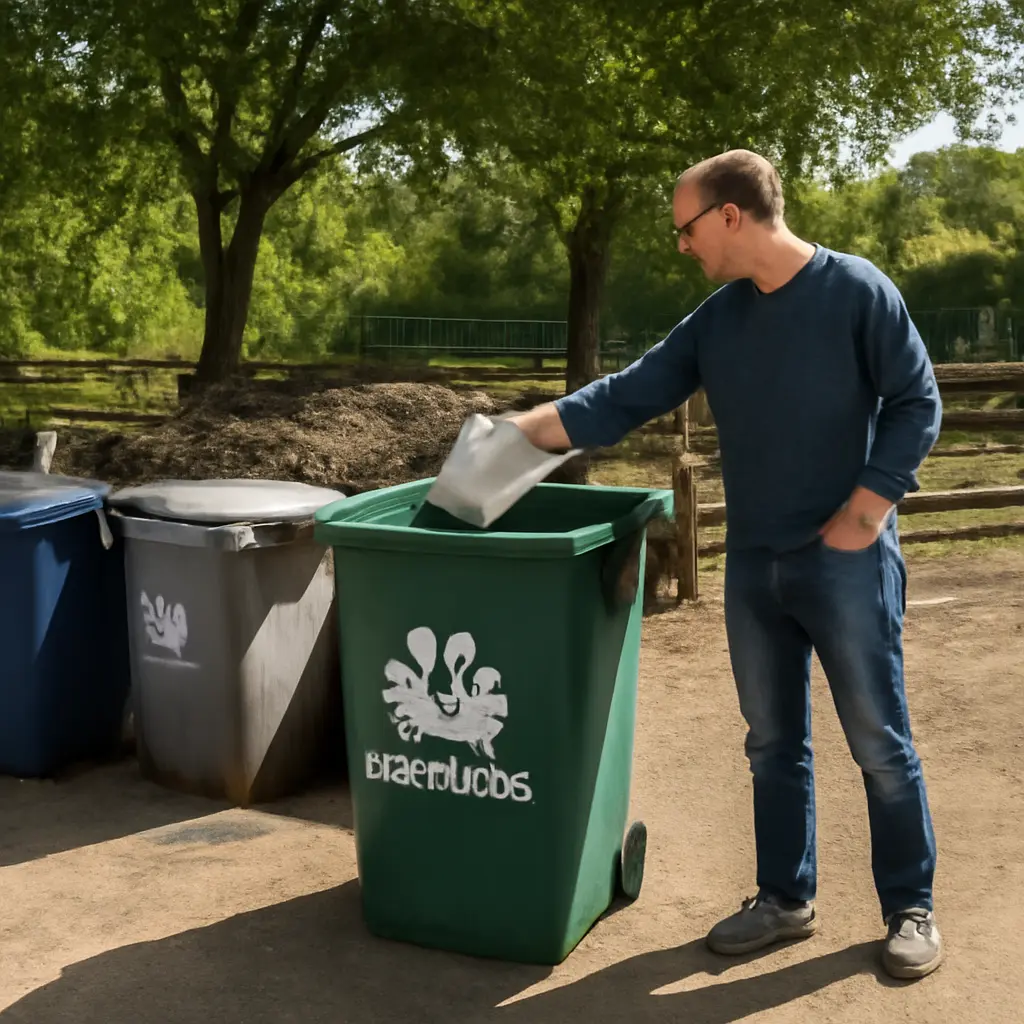
Compostable labels describe a material’s ability to break down under specified conditions—not a guarantee that the finished package will compost wherever it is thrown. A package may need an industrial composting facility, yet be sent to a landfill because local facilities do not accept it, its label is unclear, or the package’s inks, adhesives, and other components are not certified together. That distinction matters as compostable packaging expands: the U.S. Environmental Protection Agency estimated that containers and packaging made up 82.2 million tons of municipal solid waste in 2018, or 28.1% of the total. Understanding certification, local collection, packaging design, and disposal rules is essential to judging whether “compostable” delivers a real environmental benefit.
Compostable packaging labels describe conditions, not disposal outcomes
A compostable label is a claim about how a product or material performs in a defined composting environment. The Federal Trade Commission’s Green Guides explain that unqualified compostable claims should be supported by competent and reliable scientific evidence that all materials in the item safely become usable compost in a timely manner. If appropriate composting facilities are not available to a substantial majority of consumers or communities where the item is sold, marketers should qualify the claim.
The key distinction is between compostability and composting access. A certified package may meet a laboratory or facility-based standard, but it will not become compost through a certification alone. It must be collected, accepted by a composting operation, and processed under conditions suitable for the material. The term also does not mean “biodegradable anywhere”: degradation rates depend on factors such as temperature, moisture, oxygen, and microbial activity.
That distinction is increasingly important because “compostable” can refer to different materials and systems. A label might apply to a food-service item, a paper package, or a certified compostable plastic. Each can have different processing requirements, and local operators may accept some categories but reject others.
Industrial compostability
Industrial, or commercial, compostability means a product is designed to break down in a managed composting process with controlled conditions. ASTM International’s standard specification ASTM D6400 addresses compostable plastics intended for municipal or industrial aerobic composting facilities; ASTM D6868 covers products that combine plastics with paper or other substrates. Certification programs such as BPI’s use relevant standards to assess products and identify certified items.
These standards are not promises that an item will disappear in a backyard pile, a roadside environment, or a landfill. Industrial facilities can maintain temperatures and processing conditions that home systems may not achieve. Even then, certification does not ensure that a particular facility will accept the item. Some operators exclude compostable plastics because they are difficult to distinguish from conventional plastic, may not break down within the facility’s processing window, or can create contamination concerns.
Home compostability
Home-compostable means the product has been assessed for decomposition in a less controlled home composting environment, typically with lower and more variable temperatures than commercial systems. A product certified for industrial composting is not automatically suitable for home composting; the claim must be supported for the specific conditions and standard involved.
Consumers should look for an explicit home-compostable claim and its certification details rather than assuming that a generic compostable symbol applies to a backyard bin. Local guidance also matters: a home-compostable item may still be unsuitable for a particular household’s pile if it is too large, coated, or slow to break down.
Biodegradable is not the same as compostable
“Biodegradable” broadly describes biological breakdown, but without a specified environment, timeframe, and end result, the term may tell consumers little about how or where a product will decompose. Compostability is a more specific claim when it is tied to a recognized standard and defined composting conditions. Neither term should be read as permission to litter or as proof that a product will break down quickly in nature.
The FTC warns that unqualified degradable claims can mislead when products are unlikely to decompose within a reasonably short period after customary disposal. For packaging, the practical questions are therefore: what conditions does the claim require, what evidence supports it, and can the local waste system handle it?
Certification verifies material performance, not local collection
Third-party certification can help substantiate a compostability claim, but it verifies product performance against a standard—not the package’s entire journey after purchase. BPI certification, for example, is based on applicable compostability standards and is intended to help identify products suitable for commercial composting. A certification mark is useful only when consumers and waste operators can identify the certified product and the relevant collection route.
Certification should also apply to the complete item as sold, not just one component. A package may include a paper body, plastic lining, adhesive, ink, label, or coating. If those parts are not included in the assessment, the main material’s certification may not establish that the assembled package is compostable.
What standards and certification can establish
Compostability standards set test requirements for characteristics such as disintegration, biodegradation, and effects on compost quality. They help distinguish materials designed for composting from products that merely look or feel similar. ASTM D6400 and D6868 are widely referenced U.S. specifications for compostable plastics and plastic-containing products intended for industrial composting.
However, a standard does not establish that every composting facility accepts a product, nor does it guarantee that a package will be collected separately from trash. Certification is evidence about a product under defined testing conditions. It is not a substitute for clear disposal instructions or a functioning organics collection program.
Why the entire package matters
A package is a system of connected components. A compostable cup with a non-compostable lid, a certified bag with an uncertified label, or a paper container with a persistent plastic lining can leave users unsure about what belongs in the compost bin. If only one component is certified, the claim should make that limitation clear.
For procurement teams, the practical check is to request certification documentation for the complete product configuration—including inks, coatings, adhesives, and closures—and confirm that the certifier’s listing matches the product being purchased. Small changes in formulation or suppliers can affect whether the final item remains covered by certification.
Local composting access determines whether a label becomes an outcome
Access is the operational link between a compostable claim and actual composting. The EPA’s 2018 waste data show the scale of the packaging challenge, but national waste totals do not indicate whether a particular community has a facility that accepts compostable packaging. Collection rules vary by municipality and compost operator, and some programs accept food scraps while excluding compostable plastics or food-service ware.
The result is a mismatch: a package can be technically compostable but lack an available route into composting. If residents place it in recycling, it may contaminate the recycling stream; if they put it in the trash, it generally follows the local disposal pathway rather than a composting process. The correct bin is therefore determined by local instructions, not by the label alone.
Facility acceptance varies
Composting facilities make acceptance decisions based on their equipment, process duration, end-product requirements, and contamination controls. Some screen out compostable plastic items because they resemble conventional plastics or do not reliably disintegrate during the facility’s operating cycle. Others may accept certain certified products when they arrive through a controlled food-waste program.
This variability makes a package’s disposal instructions location-dependent. Businesses should ask their hauler and receiving compost facility which specific items are accepted, rather than relying on a supplier’s general statement that a product is compostable. Residents should check municipal or service-provider guidance before putting packaging in an organics bin.
Collection and sorting can fail before processing begins
Even where a facility accepts compostable packaging, the item must be correctly sorted and transported. Confusing labels, look-alike conventional plastics, and inconsistent bin signage can send compostable products to landfill or conventional plastics into compost. Both outcomes undermine the intended waste pathway.
Programs work best when packaging claims, bin labels, public instructions, and facility acceptance policies use consistent language. Clear instructions should name the accepted item and destination—for example, “accepted in the commercial organics program”—rather than relying on a compostable logo without explaining where the product belongs.
Packaging design and labeling affect real-world compostability
Compostable packaging performs as part of a larger system that includes product design, consumer behavior, collection, and processing. A package that is difficult to identify or separate can fail operationally even if its materials meet a technical standard. Design decisions should therefore consider the disposal infrastructure available in the markets where the package will be sold.
The EPA’s Sustainable Materials Management framework emphasizes considering environmental impacts across a product’s life cycle. In packaging decisions, that means comparing compostable options with reduction, reuse, and recyclable designs rather than assuming that a compostable claim automatically makes a package preferable.
Clear claims reduce consumer confusion
A useful label identifies the specific composting route, such as “commercially compostable where facilities accept it,” and gives a practical disposal instruction. If the item is not suitable for home composting, the label should not imply that it is. If access is limited, that limitation should be prominent enough for consumers to understand before disposal.
The FTC Green Guides advise marketers to qualify compostable claims when appropriate facilities are not available to a substantial majority of consumers or communities where the product is sold. This principle connects environmental marketing to actual infrastructure: a technically accurate claim can still mislead if it leaves out a limitation that changes the consumer’s disposal choice.
Real-world example: food-service packaging
A restaurant may replace a conventional plastic fork with a certified compostable fork and place it beside a food-scrap collection bin. If the local organics hauler accepts food scraps but rejects compostable cutlery, the fork may be removed during sorting or sent to disposal. The environmental result depends on the restaurant’s collection contract and the facility’s acceptance list, not just the fork’s certification.
A stronger program coordinates the product specification with the waste operator, uses consistent signs at the point of disposal, trains staff, and periodically checks contamination and rejected loads. This approach treats compostable packaging as a system choice rather than a stand-alone material substitution.
Consider alternatives before switching materials
Compostable packaging is most useful when it supports a workable organics program—for example, when packaging is difficult to separate from food scraps and the receiving facility accepts it. Where compost collection is unavailable, reducing unnecessary packaging, using reusable systems, or selecting materials compatible with established local recycling may be more practical. The best option depends on the package’s function, local infrastructure, contamination risks, and life-cycle impacts.
How to evaluate a compostable packaging claim
A label should be treated as the beginning of a verification process. Consumers can check local disposal guidance; businesses can verify certification and facility acceptance; and manufacturers can design the full package and its instructions around the waste systems that will actually handle it.
- Identify whether the claim is for industrial composting, home composting, or a specific certified program.
- Check whether a recognized standard and independent certification apply to the complete package, including coatings, inks, adhesives, and closures.
- Ask the local municipality, hauler, or composting facility whether it accepts that exact item.
- Follow the local disposal instruction rather than placing the product in recycling or organics based only on its appearance or logo.
- For businesses, monitor contamination, rejected loads, and whether the claimed composting route is available where the package is sold.
Conclusion: compostable labels need a real composting pathway
Compostable packaging labels describe performance under defined conditions; they do not guarantee collection, facility acceptance, or successful composting. Industrial and home compostability are different claims, certification covers specified product performance, and local infrastructure determines whether a package reaches a suitable process. Packaging components, confusing instructions, and inconsistent acceptance rules can all break the pathway.
Before choosing or disposing of a compostable package, verify the exact certification, confirm local acceptance, and follow the instructions of the receiving waste program. Manufacturers and businesses should coordinate package design and labeling with compost operators. The broader lesson is simple: judge compostable packaging by the system that can process it—not by the word on the label.
Sources: Federal Trade Commission, Guides for the Use of Environmental Marketing Claims (Green Guides), https://www.ftc.gov/legal-library/browse/rules/green-guides; U.S. Environmental Protection Agency, Advancing Sustainable Materials Management: 2018 Fact Sheet, https://www.epa.gov/sites/default/files/2021-01/documents/2018_ff_fact_sheet_dec_2020_fnl_508.pdf; ASTM International, ASTM D6400, Standard Specification for Labeling of Plastics Designed to be Aerobically Composted in Municipal or Industrial Facilities, https://www.astm.org/d6400-23.html; ASTM International, ASTM D6868, Standard Specification for Labeling of End Items that Incorporate Plastics and Polymers as Coatings or Additives with Paper and Other Substrates Designed to be Aerobically Composted in Municipal or Industrial Facilities, https://www.astm.org/d6868-21.html; Biodegradable Products Institute, Certification, https://bpiworld.org/Certification; U.S. Environmental Protection Agency, Sustainable Materials Management Basics, https://www.epa.gov/smm/sustainable-materials-management-basics.