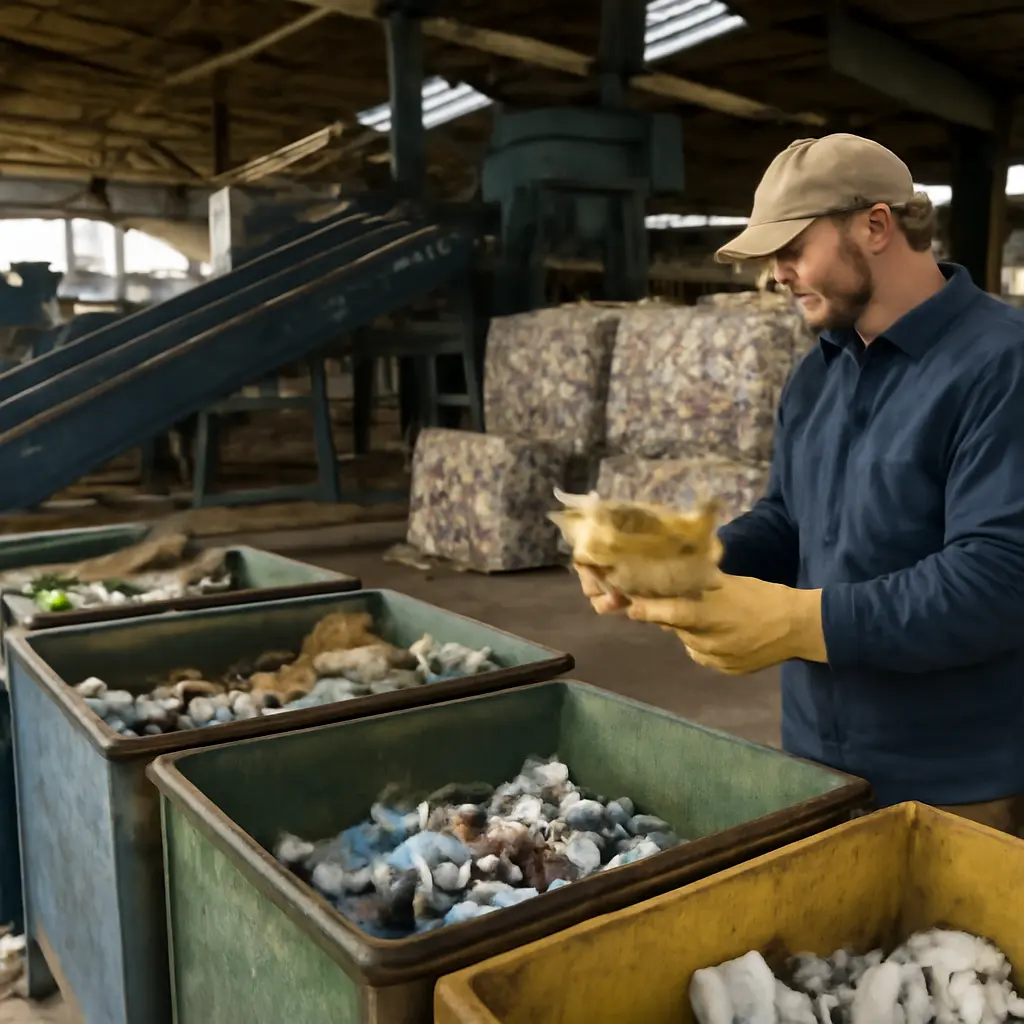
Carton compression strength determines whether a stacked box protects its contents or buckles under the load above it. Designing for that strength means accounting for the box, the product, stacking height, storage time, humidity, and handling—not simply choosing thicker cardboard. The need is substantial: the U.S. Environmental Protection Agency estimated that containers and packaging accounted for 82.2 million tons of municipal solid waste in 2018. Better-designed boxes can reduce damage and avoid unnecessary material, but only when engineers calculate loads, test realistic conditions, and verify performance in use.
What carton compression strength means for box design
Carton compression strength is a package’s ability to resist a crushing load applied to its faces, especially when boxes are stacked. ASTM International defines the relevant laboratory method in ASTM D642, which covers compression testing of shipping containers, components, and unit loads. The result is typically reported as force at failure or at a specified deformation; it is not a universal guarantee that a box will survive every warehouse stack.
The related measures are easy to confuse. Edge crush test (ECT) measures corrugated board’s resistance to compression on its edge. Box compression testing measures the assembled container. Burst strength measures resistance to pressure that ruptures the board, while puncture resistance concerns penetration by a pointed object. These properties can contribute to package performance, but none alone captures the full behavior of a loaded box.
A useful first estimate is the load carried by the lowest box: the weight of the boxes above it, plus any additional stacking load. If a pallet has six layers, a bottom-layer box may support the weight of five layers above, before accounting for dynamic handling, uneven floors, or storage duration. A design must provide a safety margin because corrugated board can lose strength through moisture exposure, creep, damage, and imperfect alignment.
Box compression strength and the McKee estimate
The McKee equation is an engineering estimate of corrugated box compression strength. In a commonly used form, it relates predicted box compression to board edge crush strength, board caliper, and the box perimeter. It is useful during early design because it connects measurable board properties and box dimensions to an estimated failure load. It is an estimate, however—not a substitute for testing the finished package.
The equation’s practical lesson is that a box’s strength depends on more than paper weight. Board construction, flute profile, box dimensions, manufacturing quality, and the condition of the board all matter. Because different McKee formulations use different units and assumptions, designers should document the version and inputs they use rather than treating a calculated result as a guaranteed rating.
Stacking load and safety factor
Stacking load is the compressive force imposed by boxes placed above a package. A safety factor is the ratio between measured or predicted box strength and the expected service load. No single factor suits every shipment: long storage, high humidity, vibration, poor pallet alignment, and frequent handling may demand a more conservative design than a short, dry shipment.
The Fiber Box Association’s technical guidance discusses how environmental and use conditions affect corrugated performance. Designers should treat stacking calculations as an initial screen, then test boxes under conditions representative of distribution. A box that passes a short laboratory test may still fail after weeks in a humid warehouse.
Design box geometry and board construction to resist crushing
Once the required load is understood, the next step is to select geometry and corrugated construction that carry it efficiently. Corrugated board is a sandwich structure: linerboard faces are bonded to a fluted medium, creating stiffness and cushioning with relatively little material. The design challenge is to direct compression through strong, aligned panels while avoiding weak spans, excessive unsupported openings, and poor load transfer.
Board grade, flute, and edge crush strength
Board grade describes a corrugated construction’s specified material and performance characteristics; flute refers to the wave-shaped medium between linerboards. Common flute profiles differ in thickness, cushioning, print surface, and stacking behavior. Higher ECT board can often achieve a required compression performance with less material than a design based only on burst strength, but the best choice depends on the product, converting process, and distribution environment.
The Fibre Box Association and corrugated-industry technical materials describe ECT as a measure of board edgewise compression. It is a useful quality-control and design input, but it does not predict every failure mode. A box can have strong board yet perform poorly if its dimensions, scores, joints, or closures allow the panels to buckle.
Box dimensions, panel proportions, and orientation
Box proportions affect how loads move through the panels. Tall, narrow boxes can be more vulnerable to instability than well-proportioned boxes of similar capacity, while large unsupported panels may bow under pressure. Designers should also consider the direction of the corrugation and how the box will be erected, filled, closed, and stacked. Consistent orientation helps align the strongest load paths vertically.
A packaging redesign should therefore evaluate the product dimensions and pallet pattern together. If boxes overhang a pallet, their edges lose support; if they are misaligned, the load may concentrate on weaker panel areas. Interlocking patterns can improve unit-load stability in some cases, but they may reduce vertical column alignment and box compression strength. The best pallet pattern balances stability, support, and compression performance.
Structural features, seams, and closures
Scores, slots, hand holes, ventilation openings, and cutouts interrupt the board and can reduce strength. The manufacturer’s joint and the top and bottom closures also influence whether the box keeps its shape under load. Designers should avoid placing openings where they undermine critical vertical load paths, and should validate closure methods such as tape, staples, or adhesive with the actual package configuration.
The box should be designed as a complete structure, not as a flat-board specification. A change to a hand hole, flap overlap, or seam can alter compression behavior even if the board grade stays the same. Prototype testing is especially important when changing dimensions or converting details.
Test boxes under realistic storage and distribution conditions
Laboratory tests turn design assumptions into measurable evidence. ASTM D642 provides a method for compression testing, while ASTM D4332 covers conditioning containers, packages, or packaging components for testing. Conditioning matters because paper-based packaging responds to temperature and relative humidity; a test performed only in a comfortable, dry laboratory may overstate performance in a damp supply chain.
Compression tests and conditioning
In a box compression test, a testing machine applies force to a container and records load and deformation. The result can reveal the maximum load, the point at which the box begins to deform, and how the package fails. Testing should use representative box samples, closure methods, product weights, and conditioning procedures. The test plan should state whether the box is empty or filled and whether it is tested in a particular orientation.
Humidity is a critical variable for corrugated packaging. The Institute of Packaging Professionals and corrugated-industry references emphasize that moisture can weaken paper-based materials. Where a shipment may face high humidity, cold storage, condensation, or extended dwell time, conditioning specimens to relevant environments can make test results more useful than relying on a standard dry-condition result alone.
Distribution testing and package-system validation
Compression is only one part of shipping performance. Packages may also experience impact, vibration, drops, and repeated handling. The International Safe Transit Association’s test procedures address distribution hazards through standardized package tests. Choosing a procedure depends on the shipment’s distribution system, such as parcel delivery or unitized freight; passing one test does not automatically validate a package for every route.
The package should be evaluated as a system: box, product, cushioning, closure, pallet, stretch wrap, and handling environment. For example, a product that supports the box walls internally may improve compression performance, while a void or unevenly distributed load can create local stress. A test plan that omits the actual product can miss these interactions.
Failure analysis and corrective action
A crushed box is evidence to investigate, not simply a reason to specify heavier board. Record where failure started, whether the box was wet or damaged, how the pallet was stacked, and whether the product shifted. Panel buckling may point to geometry or load alignment; corner damage may indicate handling or pallet overhang; softening may indicate moisture exposure.
Corrective actions should target the root cause. Options include revising the pallet pattern, changing box dimensions, improving the closure, controlling moisture, adding internal support, or selecting a different board construction. Retest the revised package under the same conditions so that the improvement can be compared objectively.
Reduce material without sacrificing box performance
Overbuilding a box can waste fiber and increase shipping volume, but underbuilding can cause product damage, returns, and replacement shipments. The EPA’s 2018 waste estimate—82.2 million tons of containers and packaging in U.S. municipal solid waste—shows why packaging efficiency matters at scale. That figure covers many packaging materials, not corrugated boxes alone, so it should be treated as context rather than a measurement of box waste specifically.
Right-sizing and material optimization
Right-sizing means choosing dimensions that fit the product and necessary protective materials without excessive empty space. A smaller, well-proportioned box can reduce material use and shipping cube, but it must still provide adequate clearance, cushioning, and stacking strength. Changing box dimensions can alter compression performance, so a size reduction should be followed by testing rather than assumed to be harmless.
Material optimization can include selecting an appropriate ECT grade, reducing unnecessary layers, or redesigning a package to use board more efficiently. It should not rely on paper weight alone: the relevant comparison is performance per package under the intended conditions. A lighter box that causes more product damage may increase total environmental and financial costs.
Real-world application: a warehouse stack review
Consider a product shipped in identical boxes stacked several layers high. If bottom cartons fail only after extended storage, the cause may be sustained load or humidity rather than an immediate lack of board strength. A practical review would weigh the loaded cartons, calculate the load on the bottom layer, inspect pallet alignment and overhang, condition samples for the warehouse environment, and conduct compression tests on the complete package.
If the review finds that boxes are misaligned or exposed to moisture, correcting those conditions may preserve performance without increasing board weight. If the test still shows inadequate capacity, a change in board construction or box geometry can be evaluated. This sequence avoids the common but costly reflex of adding material before identifying why the boxes are crushing.
Conclusion: design boxes for the load they will actually carry
Carton compression strength is shaped by board properties, box geometry, stacking load, closures, moisture, storage time, and pallet alignment. ECT and the McKee equation help estimate performance; ASTM compression and conditioning methods help validate it; distribution testing and failure analysis reveal whether the package survives its real journey.
To stop boxes from crushing under their own weight, measure the service load, design the whole package and pallet system, test in realistic conditions, and correct the root cause before adding material. Packaging and logistics teams can begin by reviewing their highest-damage box sizes, documenting stack and storage conditions, and running controlled compression tests. That disciplined approach protects products while supporting material and waste reduction.
Sources: U.S. Environmental Protection Agency, Advancing Sustainable Materials Management: 2018 Fact Sheet, https://www.epa.gov/sites/default/files/2020-11/documents/2018_ff_fact_sheet.pdf; ASTM International, ASTM D642, Standard Test Method for Determining Compressive Resistance of Shipping Containers, Components, and Unit Loads, https://www.astm.org/d0642-20.html; ASTM International, ASTM D4332, Standard Practice for Conditioning Containers, Packages, or Packaging Components for Testing, https://www.astm.org/d4332-22.html; Fibre Box Association, Corrugated Packaging Design and Performance Resources, https://www.fibrebox.org/; International Safe Transit Association, Test Procedures, https://ista.org/test_procedures.php.